|
Getting your Trinity Audio player ready...
|
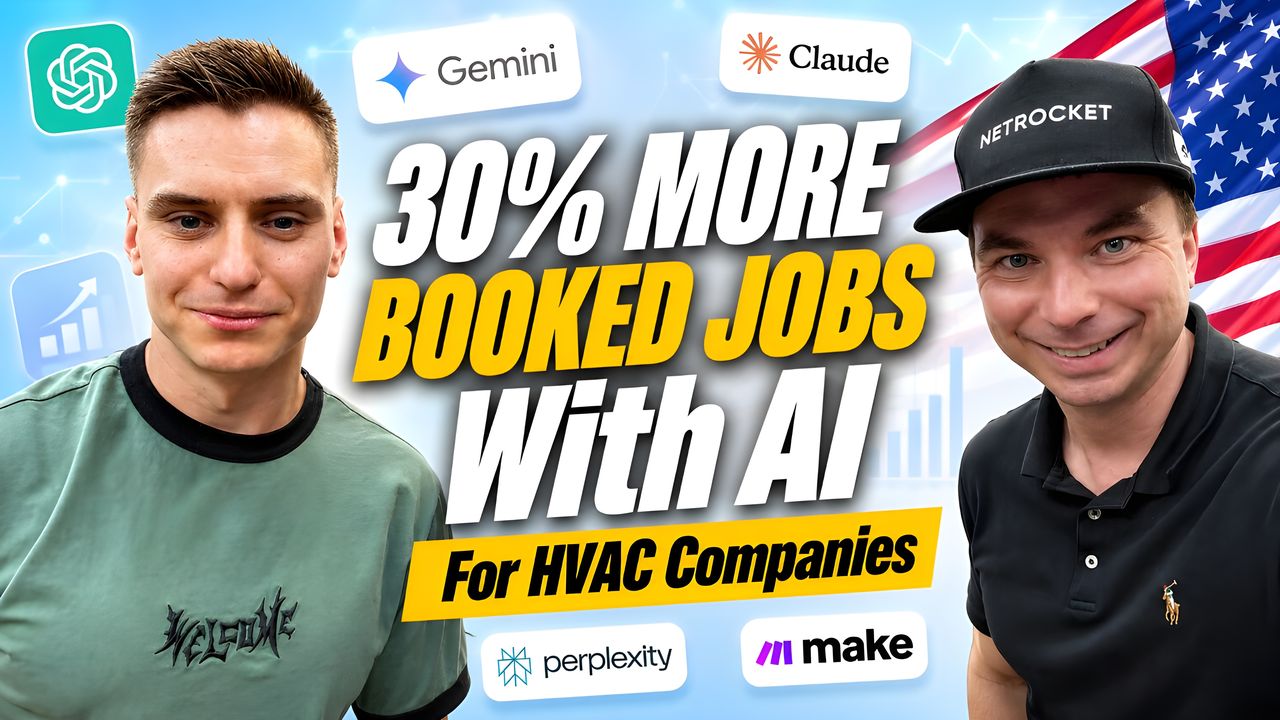
In this episode of the 8-Figure HVAC Brands Podcast, Netrocket founder Daniel Dramshev talks with Igor Parinov, founder of Closer AI, about voice AI for HVAC, appliance repair, and other home service companies. Igor explains how an AI agent answers inbound calls, qualifies leads, and books service calls in your CRM, and they test it live on a call.
About the guest
| Name | Igor Parinov |
| Role | Founder, Closer AI |
| Background | 10+ years running an outsourced call center |
| Focus | Voice AI agents for home service businesses |
Why call centers turned to voice AI
Before building AI, Igor ran an outsourced call center for more than a decade. The biggest problem was turnover. Agents burned out on low conversion rates and unqualified leads, and the team constantly spent time hiring and training new people.
“Nobody wakes up and thinks, ‘My dream is to be a call center agent.’“
When generative AI appeared, Igor’s team decided to turn it into a call center agent that talks by voice. AI doesn’t burn out, doesn’t take criticism personally, and just offers another option. They built inbound and outbound calling agents a couple of years ago, before “AI agents” became a buzzword.
The two rules for converting inbound calls
According to Igor, booking service calls in home services comes down to two simple rules:
“Step one, pick up the phone. Step two, do not get in the way of the customer booking this call.“
His AI agent answers within 3 seconds. It’s trained on sales best practices from real calls: mixing discovery questions with short presentations, and adding expert comments when the customer describes the problem, like explaining that a leaking fridge is probably a clogged drain.
Every missed call is wasted budget, especially if you’re paying for leads through HVAC PPC or Facebook ads.
How the AI qualifies and books a lead
In most home service businesses, the first step is booking a service call with a technician, and that’s what the AI handles. The flow is simple:
- Greet the customer
- Qualify the lead: do you serve this area and this type of unit or appliance?
- Identify the need: what’s broken, and is it a problem you solve?
- Book the service call and handle objections along the way
The lead arrives in your CRM already qualified and booked, with all the customer’s questions answered.
Live demo: AI agent “Elliot”
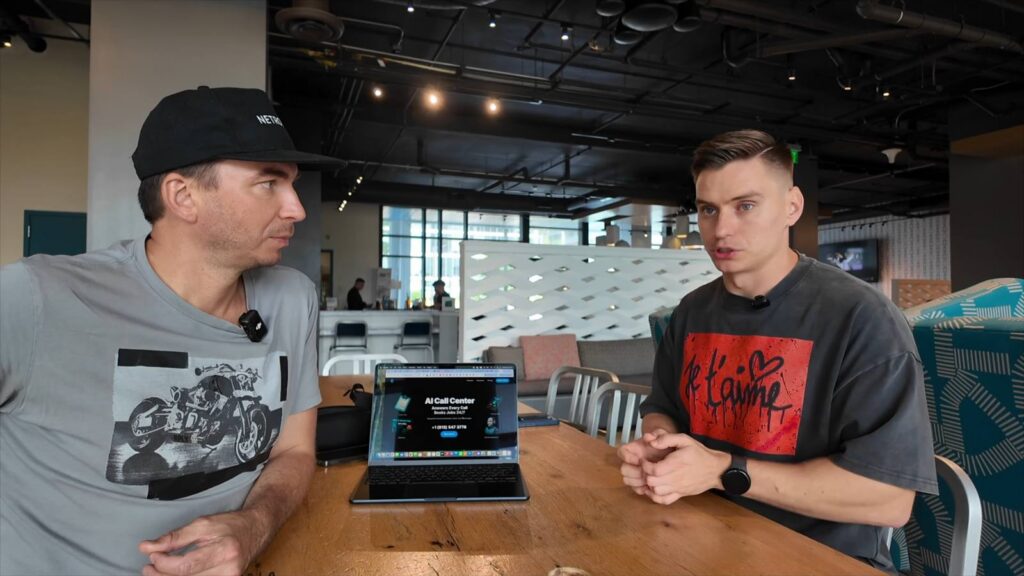
Daniel and Igor call the AI agent on camera. Elliot sounds like a real person, with office noise in the background, and openly says he’s AI and that a manager reviews his calls. Even when Daniel explains they’re just testing, Elliot politely tries to move him toward booking. Daniel notes that this is exactly what you want from a pre-sales agent: it always moves the customer to the next step.
Results compared to human agents
Igor’s main competitor is the human pre-sales agent, so the goal is to match or beat human conversion rates. Typically, the AI converts 10% to 15% better than a regular call center, sometimes up to 20%. Clients can expect 75% to 85% of qualified leads to be booked.
If a caller insists on talking to a real person, the AI transfers the call. After hours, when no one is available, it sends a text to a customer rep so the caller knows someone will follow up.
“95% of inbound calls can be handled and booked with AI if the goal is to book a new service call.“
Overflow mode vs. AI-first mode
Igor describes two ways to use AI on the phones:
- Cautious approach: use AI after hours or as overflow, when your team doesn’t pick up within 20 to 30 seconds. Daniel suggests a shorter window of 5 to 10 seconds.
- AI-first approach: AI answers every call by default and transfers edge cases to a human. You need far fewer people on the phones, so you can keep the best ones and pay them more.
CRM integration and smarter technician routes
Closer AI connects to CRMs like Housecall Pro, Workiz, and ServiceTitan, or any CRM with an API. It books service calls directly into the technician’s calendar, so the schedule is ready in the morning.
The AI also plans the order of jobs. Booking first come, first served can send a technician 80 to 150 miles across the map in one day. Instead, the algorithm builds circular routes, so technicians spend less time in traffic.
DIY voice AI vs. a custom solution
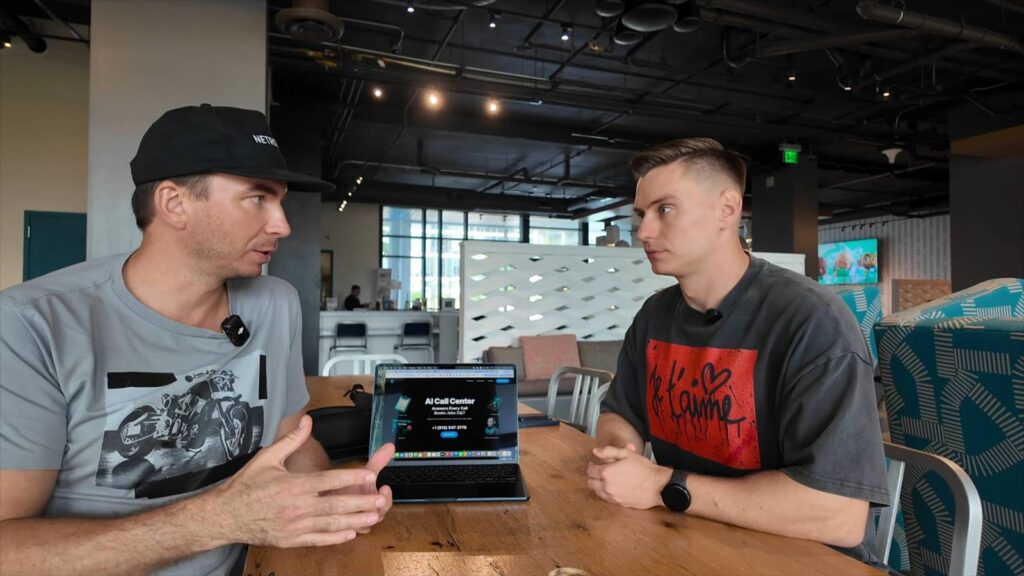
Many CRMs now include basic voice AI. Igor explains the difference: DIY platforms give you the tool, but you have to set it up yourself and make it convert. Closer AI is set up for each business and optimized for booking. One agent can handle 20 calls at the same time and scale to hundreds or thousands.
The main niches are home services: appliance repair, HVAC, roofing, remodeling, and any business where you need to qualify a customer and book a visit. The typical result is 100% of calls answered, 24/7, with conversion 10% to 15% higher than a human team and almost no time spent managing it.
“It works all the time. It doesn’t ask you for a raise.“
Igor’s tip for owners who aren’t sure: try simulating a booking call for your business in ChatGPT. If it looks like it might work, a production-ready voice agent will do it for real. For more ways HVAC companies use AI in calls, CRM, and reviews, see our conversation with Denis Sinelnikov.
Subscribe on 8-Figure HVAC Brands Podcast
New episodes of the 8-Figure HVAC Brands Podcast come out every week, so subscribe on YouTube to catch the next one.