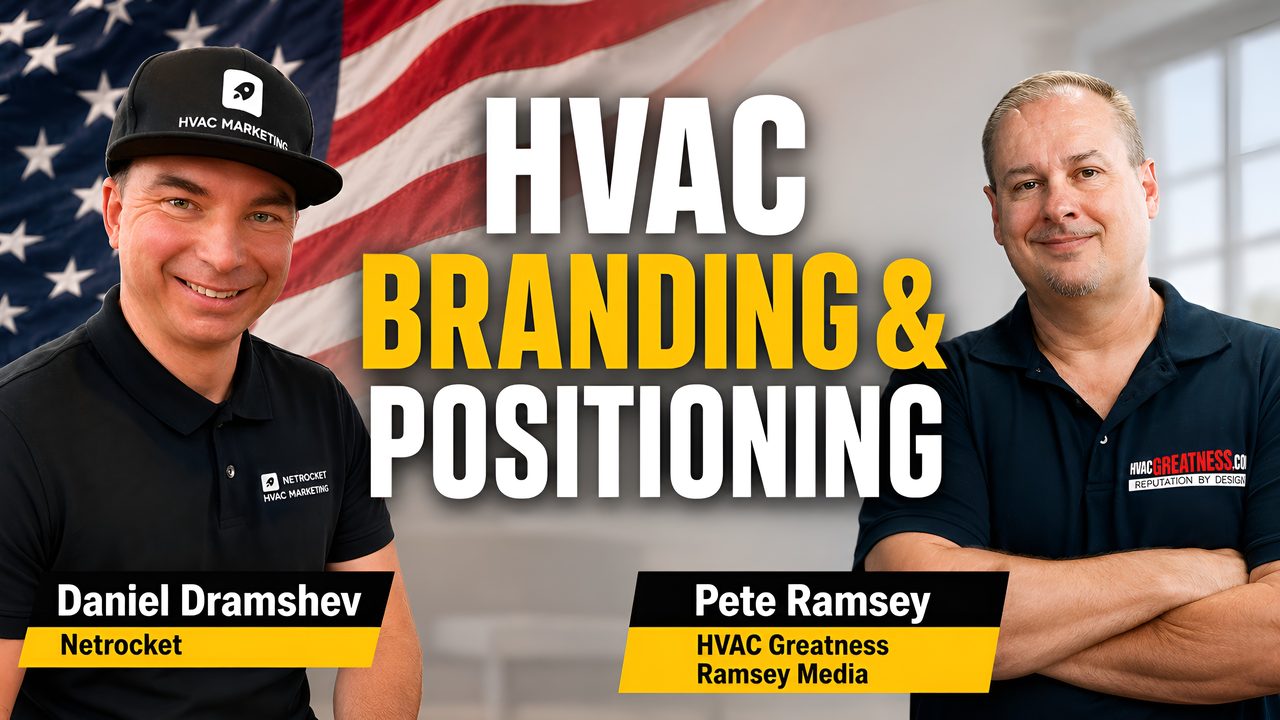
In this episode of the 8-Figure HVAC Brands Podcast, Netrocket founder Daniel Dramshev talks with Pete Ramsey, founder of HVAC Greatness and Ramsey Media. Pete is a U.S. Army veteran, a former HVAC technician, and a former HVAC business owner who now works on branding and positioning. He explains why good contractors still lose jobs to cheaper competitors, how to claim a position nobody else owns, and how to sell without bids and quotes.
About the guest
| Name | Pete Ramsey |
| Companies | HVAC Greatness, Ramsey Media |
| Experience | 44 years in the industry |
| Background | Army-trained HVAC technician, owned an HVAC company for 10 years, then spent 13 years at Lennox |
| Focus | Branding, positioning, and pricing for HVAC companies |
From Army technician to positioning specialist
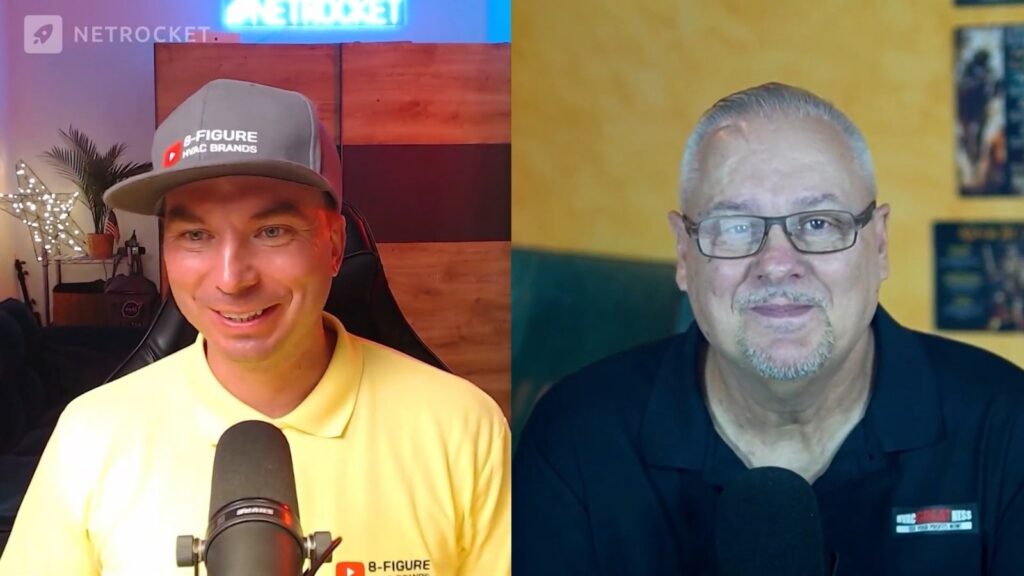
The Army trained Pete as a heating, air conditioning, and refrigeration technician in 1982 and 1983. After the Army, he worked as a service technician in Dallas, and at about 24, he started his own company in North Carolina. He says he made every mistake you could make. One of them was choosing to be a high-end equipment company in an area that wasn’t a good fit for high-end equipment.
He sold the business after 10 years and spent the next 13 years at Lennox, starting as a territory manager. In that role, he visited many other business owners. Later, he started HVAC Greatness, first with coaching and his net profit pricing method, and now with what he calls premium positioning for premium profits.
Why better companies don’t always win
“If your company’s so much better, how come customers aren’t choosing you over the other companies?“
Pete says homeowners put contractors into categories. If you look like every other company with a plain van or a generic snowflake-and-flame logo, you’re just one of those guys. That’s why homeowners say the other contractor will install the same thing, so you need to match the price.
Many skilled companies are stuck in what Pete calls the squeeze: between low-price competitors and big companies that look like national brands. Homeowners who have been burned before often choose the bigger, more established company, because a small company can’t show it’s stable and will stand behind the work. A good-looking rebrand helps, but so many companies have rebranded that it’s no longer enough on its own.
Finding your blue ocean
Pete borrows the idea from a book on blue ocean strategy. A red ocean is a crowded market where everyone fights over the same work. A blue ocean is a market with little competition. His fast food example is Chick-fil-A: instead of fighting the burger chains, it made chicken sandwiches, and it makes more money working six days a week than many competitors make working seven.
Pete says every company needs positioning from day one, but not every company needs a rebrand. Positioning becomes more important as you scale, because it protects your business like a moat.
“Brand is the evidence that proves the positioning.“
Example: Las Vegas’s only certified heat pump specialist
Las Vegas is one of the most competitive HVAC markets in the country. When Pete’s team did a competitive analysis for one contractor there, they found there wasn’t a single heat pump specialist in the market. At the same time, heat pumps were being pushed by utility rebates, manufacturer rebates, and tax incentives.
The contractor rebranded as Dr. Heat Pump and became Las Vegas’s only certified heat pump specialist. Instead of running $49 or $99 specials, he educates homeowners on why a heat pump can do more than an air conditioner. He still does all kinds of heating and air conditioning work, but now he has something new to talk about. During the episode, Daniel checked Google, and the company appeared first in the Google Maps pack.
Setting yourself apart doesn’t mean you have to become a specialist. And not every homeowner wants a heat pump, but in an industry that big, a specialist can still build a multimillion-dollar company with higher margins. Want to show up first in your local market? See how Netrocket handles Google Maps SEO.
Trust is what homeowners buy
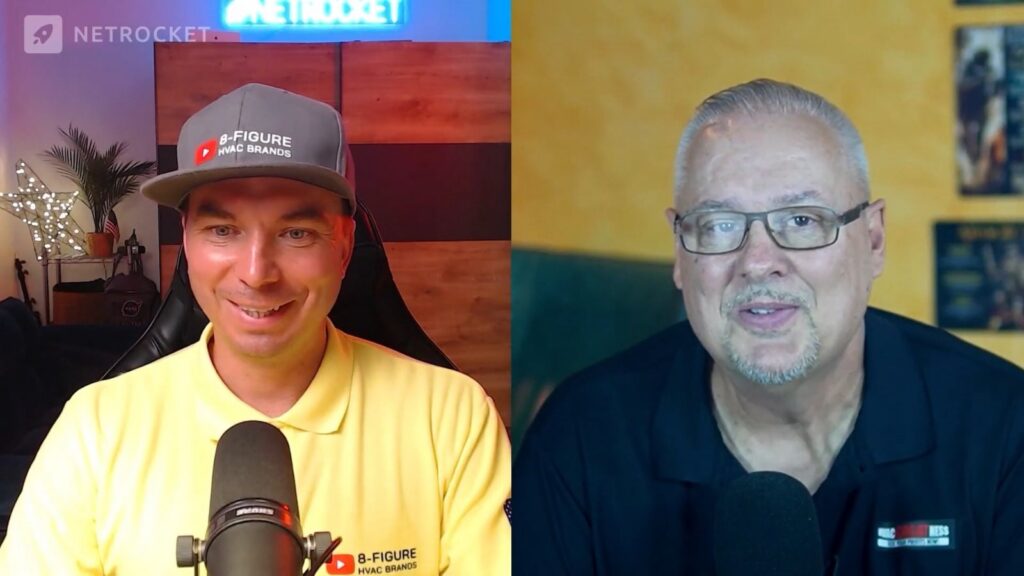
According to Pete, the number one thing quality-minded homeowners look for is trust. You can’t just call yourself honest. They have to feel it. As Zig Ziglar said, people buy for emotional reasons and justify those purchases with logic.
That’s why Pete studies the ideal homeowners in each market: their values and what they hate about dealing with contractors. If your marketing shows that you’re the opposite of what they hate, the same ads on the same platform get better results. If you want help building marketing around a clear message, learn more about digital marketing consulting for HVAC companies.
Positions and mechanisms
Your position is what you’ve chosen to be known for in your market. Pete’s example is Guardian Air in Alabama. The company positioned itself as the protector, and its whole message is “Are you protected?” It offers things many HVAC companies already offer, like theft protection, lightning surge protection, freeze protection, protection for coils in coastal environments, maintenance plans, and system monitoring. The difference is that it owns the idea of protection.
For companies that have been around a long time, Pete suggests a mechanism: something that makes your commodity different and exclusive to you. Toothpaste brands do this with a patented formula. You can buy toothpaste anywhere, but only one brand has that formula.
“If you want to sell more, give your salespeople something to sell.“
Three pieces that work together
Pete breaks premium sales into three parts, working backward from the end:
- Deliverables: high-quality solutions customized for each homeowner, not the same commodity equipment everyone else sells
- Sales process: a real diagnosis with a load calculation, static pressure, return size, and questions about allergies, asthma, and dust
- Leads: positioning that attracts experience-based homeowners instead of price shoppers
“If you are emailing quotes, if you’re doing bids and quotes, you are not selling.“
He sees three types of homeowners: price-focused shoppers, experienced homeowners who have been burned before and want the job done right, and a group in the middle that could go either way. Good positioning attracts the experienced homeowners and makes price shoppers realize you’re not the right company for them. Pete isn’t talking about luxury, but about a wise investment in one of the biggest purchases for the home.
Help technicians communicate, not push
On service calls, Pete wants technicians to be thorough, not pushy. Give them a process so they look beyond the immediate problem and bring everything to the homeowner’s attention. Then translate the technical findings into simple terms. Is it dangerous to the homeowner, like a furnace without a carbon monoxide detector? Is it dangerous to the equipment, like new electronics without surge protection? Or is it dangerous to the home, like an attic unit with a drain that could overflow into the ceiling?
The homeowner decides. If they want to wait, the technician has still done the job right, and the next visit can review the same findings.
Sales presentations that explain, not overwhelm
Pete’s sales presentations put the technical details next to something homeowners already understand. House infiltration is shown next to a leaky garden hose. A load calculation is compared to choosing the right sunscreen for the house. Matching equipment to the home is like a plug that has to fit the outlet. Maintenance plan options are laid out in a format homeowners already know, like comparing cell phones online or choosing a grade of gas at the pump, with the most popular option highlighted.
Out of 100 companies, Pete estimates maybe three have done this work, so the opportunity is huge.
The private equity opportunity
Private equity groups are buying trusted, long-running companies and pushing their technicians to sell more. When quality-minded homeowners decide to leave, Pete says they usually won’t go to a one-man or five-truck operation, even if it’s better, because they can’t see that it’s better. They choose a midsize company that looks as stable and professional as the big ones. That’s why your brand has to show you’re in the same league.
Names, mascots, and the across-the-room test
Pete warns against acronym names like ABC Heating and Air. He used an acronym for his own first company and calls it one of his mistakes. A name should be about what customers can see in themselves, not about the owner’s legacy.
“You are the guide. You’re not the hero.“
His process looks at the ideal homeowner, what the owner is good at and passionate about, and where the market has an underserved opportunity. Then the team studies competitors, chooses colors by the emotions they create, often adds a mascot for an emotional connection, and builds everything from the van wrap to yard signs and the website. One example is Repair Bear in Cody, Wyoming, a repair specialist whose mantra is “If we can’t fix it, nobody can.” Pete says the owner made his first million within about six months.
The owner of Repair Bear, Rob Cook, shared how he built the company in his own episode of the podcast.
Pete also uses the across-the-room test. Can people read your name from across the room, or your van from across the street? Can they see who you are, what you do, and what makes you different at a glance? He adds that the same thing that attracts premium customers also attracts premium employees.
For a look at what a full rebrand involves for an established company, read our episode with Clay Winters of Control Tech Heating, Air & Plumbing, a 40-truck company in Indianapolis.
Your homework: call your 10 best customers
Pete’s advice for every owner: call your 10 best customers and ask, “Why did you choose us, and why do you stay?” Write down their exact words. Your positioning is often already there in your best customers’ words.
The companies with the highest profits don’t just have better salespeople. They attract better customers, run better processes, find real opportunities on service calls, and prove they’re different at every step of the customer journey.
“Premium pricing is the result of this entire system.“
Subscribe on 8-Figure HVAC Brands Podcast
New episodes of the 8-Figure HVAC Brands Podcast come out every week, so subscribe on YouTube to catch the next one.