|
Getting your Trinity Audio player ready...
|
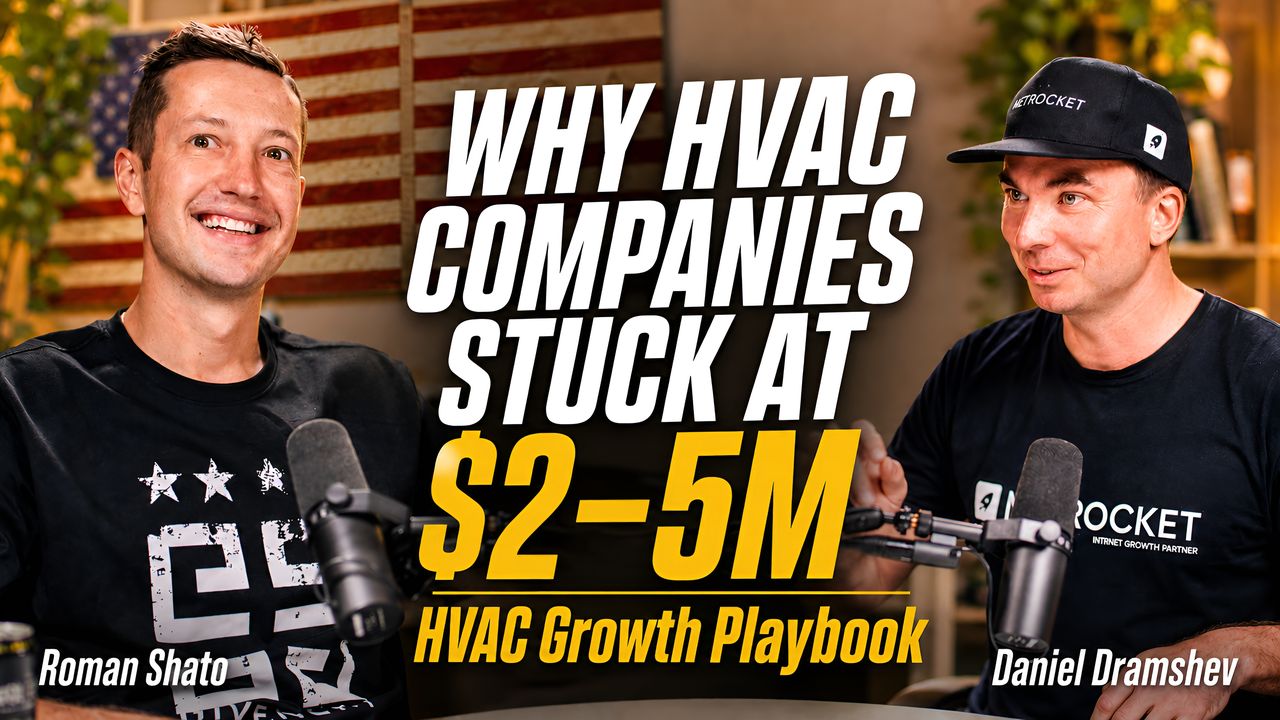
In this episode of the 8-Figure HVAC Brands Podcast, Netrocket founder Daniel Dramshev talks with Roman Shatokhin, known as Roman Shato, about why so many HVAC companies get stuck at $2M to $5M in revenue. Roman shares what he learned scaling HVAC companies in Canada and the U.S.: offers that generate leads, fast CSR response, a strong sales team, tight install processes, and a marketing budget that supports growth.
About the guest
| Name | Roman Shatokhin (Roman Shato) |
| Role | Business development for HVAC companies |
| Experience | 8 years in HVAC in Canada and the U.S. |
| Track record | Worked with companies that scaled to a $250M exit |
Experience from Canada and Florida
Roman has spent eight years in HVAC and now helps companies grow through business development. One of the companies he worked with sold for $250 million. At another company in Canada, Facebook ads alone generated $40 million in gross sales in nine months.
Problem #1: lead generation
The biggest problem Roman sees in HVAC is lead generation. Without leads, you can’t scale. For small and mid-size companies, he recommends Facebook and Instagram ads, no matter the company size.
According to Roman, it’s not the campaign that works but the offer. Look at what competitors around you are advertising and do the opposite.
“See what they do and do completely opposite.“
His formula is 60/40: spend 40% of the budget on brand content, like live videos from your team, installs, and customers, and 60% on offers. Facebook collects the people who watched your videos, so you can retarget them with offers. By the time they book, they already feel like they know you. If you want help building Facebook ads for HVAC, that’s what Netrocket does.
A fast CSR and the right booking times

Once leads come in, you need a strong CSR, the person who books appointments. Most Facebook leads come in after hours, usually between 5 and 9 p.m., so someone has to call them back right away and book them for the next day.
Friday after 4 or 5 p.m. and weekends are prime time for appointments, because both homeowners are at home. Roman’s favorite day is Sunday: less traffic, more appointments, and both decision makers in the room.
“There is no ‘I need to talk to my wife,’ because the wife is right there.“
The in-home sales process
Sales reps should present offers on an iPad with a CRM, not on paper, and always give at least three options: good, better, best. Roman also suggests using available rebates and cross-selling services like insulation to raise the ticket.
Everyone wants to close on the spot, but that’s not always possible. Roman works with the “three no” rule: handle up to three objections without being pushy. If the customer still says no, let them go.
“If you over push, you still get the same no at the end, but you lose the deal after.“
Post-install visits, referrals, and reviews
Roman’s tip that few companies use: promise the customer you’ll come back after the install to show them how to use the system and the thermostat. You keep your promise, the customer trusts you, and that’s the best moment to ask for referrals and reviews. It raises lifetime value and brings more business.
He also says few contractors work on reviews, even though reviews matter more than ever.
What marketing at scale looks like
At the company that did $40 million in nine months, the team received about 250 leads a day, which turned into around 100 confirmed appointments for the next day. That fed 30 to 40 sales reps daily, and in summer the same team closed about $7 million a month.
For a smaller company doing a couple of million a year, Roman says that with the right offer, $5,000 a month in ad spend can bring close to $200,000 in monthly production, or about 20 deals.
Leads vs. sales: track the right metrics
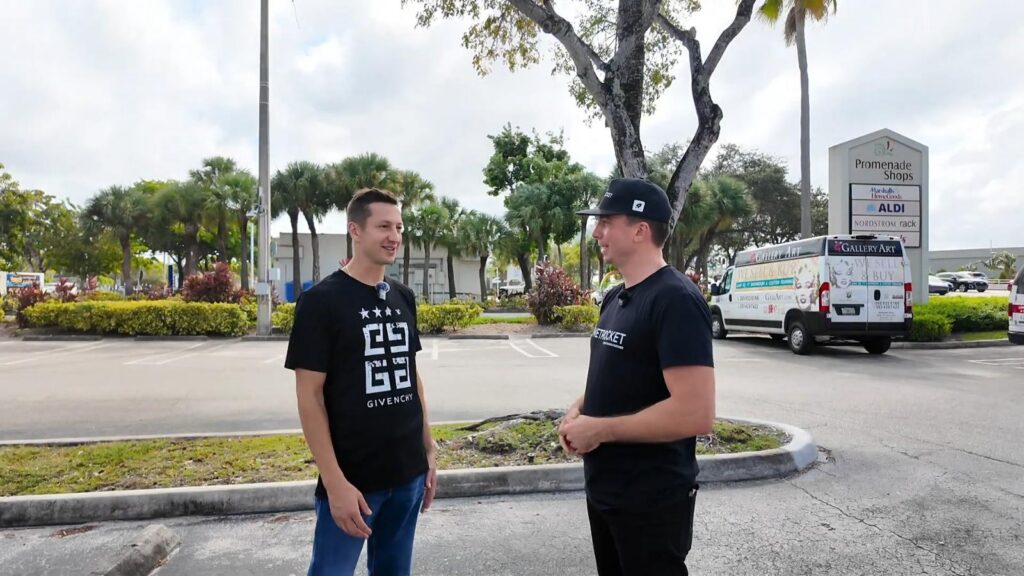
Daniel points out that many HVAC companies think they need more leads, when they actually need a stronger sales team to close them. Roman agrees: sales blames marketing for bad leads, and marketing blames sales for not closing. Owners should check sales daily and marketing at least weekly, and track cost per lead, cost per close, cost per install, and cost per customer.
What a top sales rep produces
Roman’s personal record was $3.7 million in a year. His best friend did $4.2 million. A good sales rep should produce at least $2 million a year, with strong months around $400,000 and slow months closer to $150,000. Two strong reps can bring a company to about $5 million.
The owner’s role: stop doing sales yourself
If the owner tries to run sales personally, the company won’t scale. The owner’s job is to build the team (operations manager, CSR, dispatcher) and work with the marketing team on a two- to three-month strategy, with backup offers ready if one stops working.
“For the same offer, I have five different versions, and only one of them will get the attention.“
Biggest operational mistakes
The most common mistake Roman sees in Florida is a slow process between the sale and the install:
- Unprepared installs: crews spend the morning driving between supply houses for parts that should already be in the warehouse. Prepared teams load up by 7:30 a.m., arrive by 8:30, and finish by 3 p.m.
- Low marketing budgets: owners don’t invest enough to grow.
- No in-house crew: at 20+ installs a month, an in-house team lowers the cost per install compared to subcontractors.
- No quality control: someone should check every install, with before and after photos uploaded to the CRM.
For Roman, the CRM is rule number one: it keeps notes, photos, and all the company metrics in one place.
Roadmap for companies stuck at a few million
When Daniel asks what companies stuck at a couple of million should do, Roman’s answer is short: increase the marketing budget. Combined with a strong offer, a fast CSR, and a sales team that can close, that’s how HVAC companies break through the $2M to $5M ceiling. If you’re stuck at that stage, our HVAC marketing consulting can help you find what’s holding you back.
Subscribe on 8-Figure HVAC Brands Podcast
New episodes of the 8-Figure HVAC Brands Podcast come out every week, so subscribe on YouTube to catch the next one.