|
Getting your Trinity Audio player ready...
|
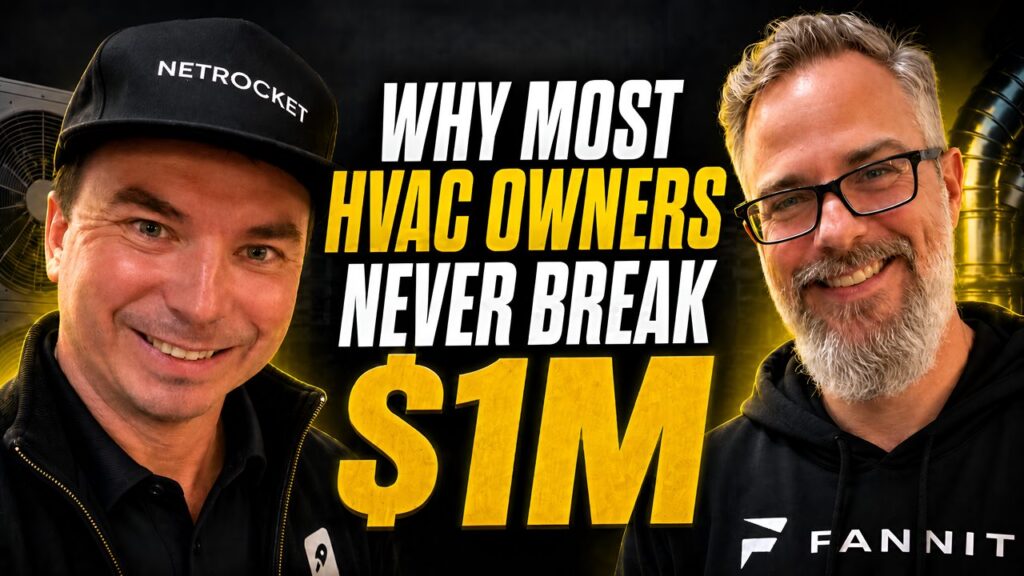
In this episode of the 8-Figure HVAC Brands Podcast, Netrocket founder Daniel Dramshev sits down in Miami with Denis Sinelnikov, CEO of Media Components. Denis asks the questions, and Daniel walks through which marketing channels HVAC companies should use at each stage of growth: Google Business Profile, Facebook lead generation, Yelp, local communities, and brand. This is Part 1 of the conversation.
About the guest
| Name | Denis Sinelnikov |
| Role | CEO, Media Components |
| Company | Digital marketing agency with 18+ years of experience |
| Location | Miami, Florida |
Marketing depends on your stage
Denis opens with a question many owners ask during the slow season: what can an HVAC company do right now to get more leads? Daniel says the answer depends on revenue. Companies under $1 million should stick to the basics. Between $1.5 and $3 million, they can test more channels. Past $5 million, the focus shifts to brand and an in-house marketing team, though even $10M+ clients still bring in an agency for specialized work like SEO.
Why new HVAC companies don’t need SEO right away
Many owners come in asking for SEO first. Daniel’s answer is that a new company doesn’t need it yet. SEO today covers far more than Google search, including voice and AI search, and it takes time and investment before it pays off.
“SEO used to be search engine optimization. Now I call it search everywhere and everything optimization: voice, AI, even Yelp.“
Start with Google Business Profile
For companies under $1 million, Daniel recommends starting with channels that bring leads in the short term, and Google Business Profile comes first. A common mistake is the main category. Owners often set it years ago, chose something like “AC repair,” and never updated it, even though they now want to sell heat pump installations and other high-ticket services.
“This is one of the first things each company has to do, and not only once, but regularly.“
Daniel shares a recent case: a new location reached top positions on Google Maps within a month, thanks to proper optimization, the right keywords, and fast reviews from existing customers.
Why reviews matter

Daniel sees established companies, even in New York City, with only 20 reviews. Denis agrees that for a multimillion-dollar business, that looks suspicious to customers. The fix is simple: ask every customer for a review, plus a photo or video with the technician and details of the job.
“The more details they mention, the better your Google profile ranks for those keywords.“
Facebook lead generation for high-ticket jobs
In parallel with Google, Daniel recommends Facebook lead generation for companies selling high-ticket services. These leads are colder than search leads, but they’re cheap. For $5,000 to $25,000 jobs, a lead can cost $35 to $50 depending on the market. Even $100 per lead works if the form qualifies people well.
“It doesn’t matter if your leads cost $30 or $50. The main thing is that it has to be profitable for the business.“
Tracking leads, sales, and revenue in CRM
To know what’s profitable, Netrocket connects to clients’ CRMs, like ServiceTitan or Housecall Pro, and tracks each channel separately: leads, qualified leads, estimates, and contracts. Daniel’s point is that marketing and sales have to be measured together.
“Revenue is blood for any business. We want to connect the marketing spend, the result, and everything in between.“
When an owner says “marketing doesn’t work,” the problem is often in the sales process: leads come in, but no one follows up.
Why Yelp still matters
Yelp doesn’t have the best reputation among contractors, but Daniel says bigger players in every market still get a share of revenue from it. When a client complains about Yelp leads, the team usually finds gaps in sales: slow response times, no follow-up, or a bot telling callers that all operators are busy.
For after-hours leads, Daniel recommends an AI responder that collects the phone number and books an estimate, even at night. It costs around $300 per month. Netrocket is a Yelp partner and holds regular meetings with Yelp’s team to review client accounts.
On budget, Daniel says a small company can start with $500 per month. In some markets, companies spend $5,000 to $8,000 per month on Yelp profitably, especially with high-ticket services.
“If you calculate and you’re not profitable, then you’re doing something wrong, either in marketing or in sales.“
Facebook groups, Nextdoor, Reddit, and local referrals
Denis notes that some of his clients grew mostly through recommendations in local Facebook groups. Daniel agrees that Facebook groups, Nextdoor, Reddit, and Quora bring trusted referral traffic, because people ask neighbors and friends before they call a provider. To find those conversations, he suggests ChatGPT deep research. To work them consistently, he recommends hiring someone in-house to act as a helpful community expert, not a salesperson.
“If you dominate the local market, you’re always in people’s minds.“
Building an 8-figure HVAC brand

The final topic is brand. Daniel describes Netrocket’s biggest HVAC client, which made $36 million last year. The company invests in its warehouse, team education, a franchise network, and consistent branding on everything from yard signs to trucks. As the owner told Daniel, every time he drives his truck, it’s branding. Denis calls it a moving billboard.
Daniel also shares that Netrocket plans to partner on or launch its own HVAC business by the end of this year or next year, and is looking for technicians to partner with on delivery and quality.
Resources mentioned
- AI autoresponder and follow-ups for Yelp leads (promo code: 8FIGUREHVAC)
Subscribe on 8-Figure HVAC Brands Podcast
This is Part 1 of the interview. In Part 2, Daniel and Denis talk about SEO, AI, reviews, marketing budgets, and how long to test a channel. For new episodes, subscribe on YouTube.