|
Getting your Trinity Audio player ready...
|
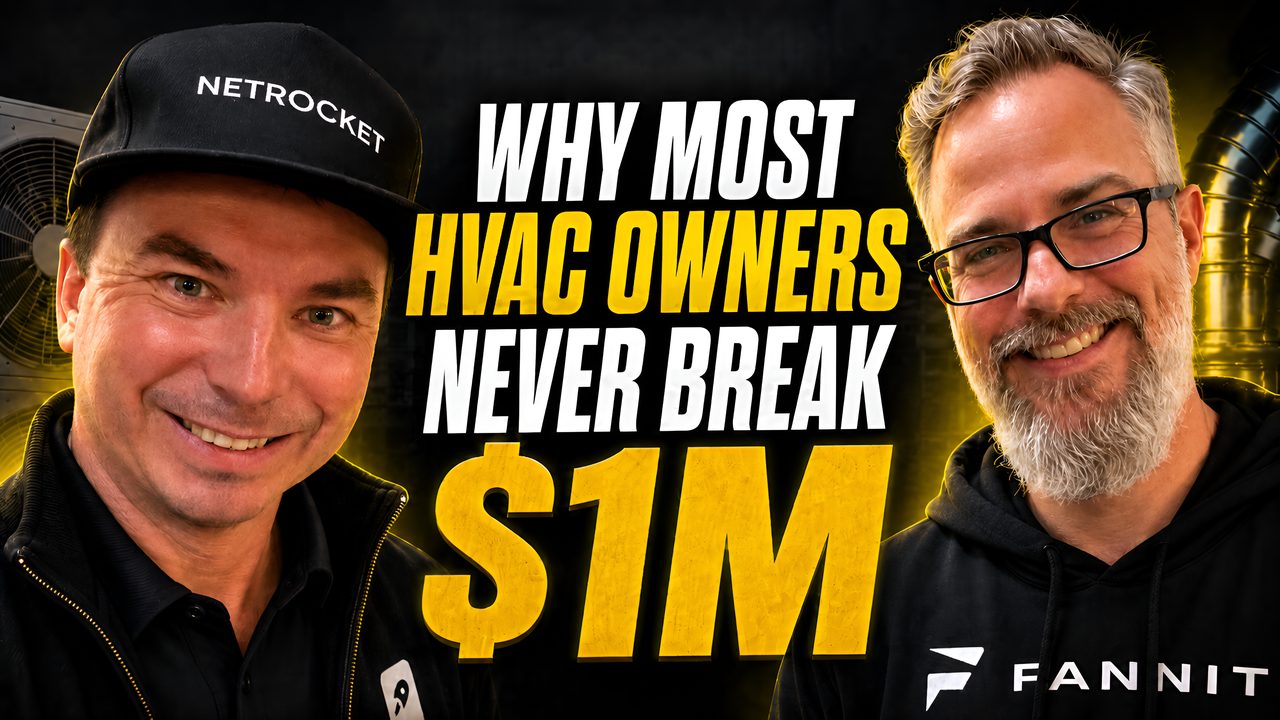
In this episode of the 8-Figure HVAC Brands Podcast, Netrocket founder Daniel Dramshev talks with Tony Lael, co-founder of the digital marketing agency Fannit. They discuss why so many HVAC and home service owners get stuck around $700K to $1M in revenue, and what has to change for the business to grow past that point: delegation, an org chart, and marketing treated as an investment.
About the guest
| Name | Tony Lael |
| Role | Co-founder, Fannit |
| Company | Digital marketing agency for home service contractors |
| Also behind | GetRocketship.com, growth systems for B2B companies |
Working on the business, not in it
Tony opens with the transition every growing contractor faces. Owners start out in the field, on the ladder or driving the truck. At some point, marketing brings in enough opportunity to scale, but the owner still believes he has to do the work himself because he knows best.
“You cease to become the professional and you start to become the business owner. And it’s a mindset shift.“
Daniel shares an example from a franchise network with 48 franchisees in HVAC. Most of them are excellent technicians, but they keep all the work to themselves, and some struggle to reach $1 million in revenue.
Why HVAC owners struggle to delegate
Tony notes that some owners are happy with a lifestyle business that pays a few people and brings in a comfortable income. This episode is for the ones who want more. For them, the role changes from technician to coach and mentor: training people, creating internal content, and getting deeper into the finances.
Treat your business as its own entity
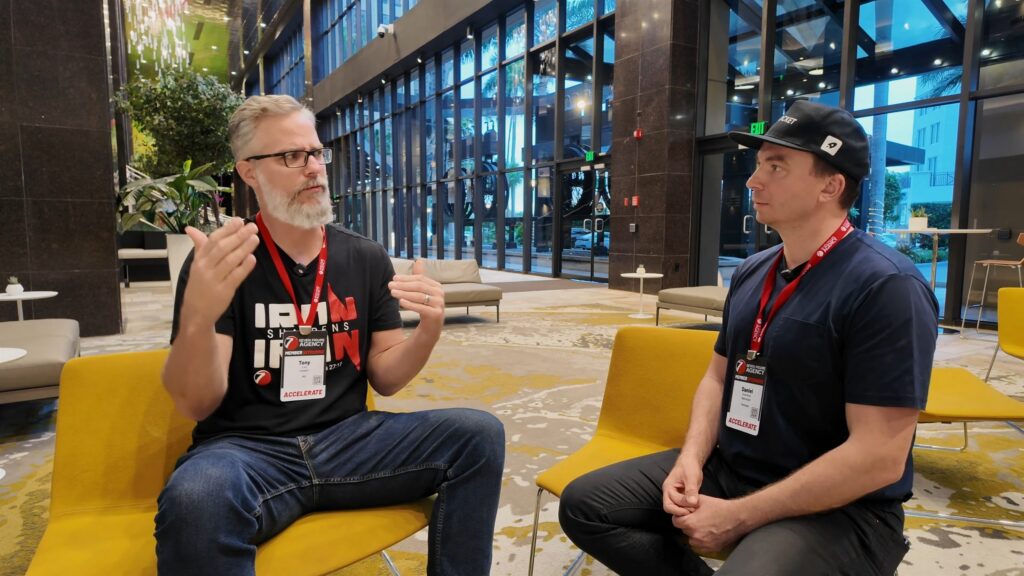
According to Tony, a business has its own profit and loss statement and balance sheet, almost like a person that earns money and pays bills. Once owners look at it that way, they can ask what they’re spending on marketing and what they’re getting back. If they don’t know, it’s time to start tracking it with their agency.
At Fannit, the team runs an internal “university”: an hourlong session every other week where a team member teaches a topic like paid ads, an AI call agent, or closing the loop between sales and marketing ROI. The sessions are recorded and now serve as a training library. Tony suggests HVAC companies do the same, filming how they duct a house or how two models differ. The same videos can train new hires and educate homeowners who wonder why a system costs so much.
The revenue ceiling for owner-operators
Daniel asks where an owner who does everything himself usually gets stuck. Tony’s answer: around $700,000 to $800,000 a year, sometimes $1.2 million.
“It’s usually as big as the imagination of the owner.“
Finding your number two
The first step Tony recommends is finding someone in the business who could become the number two: a person with the ability and the ambition to run things. Talented people sometimes get frustrated without saying they want more responsibility, and the owner’s job is to give them that next opportunity and then coach them along the way.
Daniel adds that in HVAC this person often comes from the helper role. He’s seen helpers start doing installs within about three months and outperform experienced installers. Whoever runs the business needs to understand the P&L and know which installer to send to which job.
The org chart for a $1M contractor business
Tony lays out the basic structure for a $1 million service company:
- General manager who oversees everyone
- Finance: a CPA, accountant, and bookkeeper, usually outsourced, who keep the books clean, handle taxes and payroll, and organize the P&L
- Service manager responsible for customer satisfaction and, in smaller companies, scheduling
- Field team doing the work
- Marketing and sales to generate leads and close them
Marketing goals should tie back to sales goals. If you did 100 jobs and $1 million last year with installs averaging $8,000 to $12,000, you can calculate what 200 jobs would mean for revenue, profit, and staffing.
Tony’s exercise for owners is to draw the org chart, put a name and a dollar amount in every box, and see how many boxes have their own name in them.
“When you scale your business, you’re going to have to put in double time until you get the person behind you.“
Why HVAC owners should understand marketing
Daniel points out that owners often realize there are people better than them at many of these roles, and marketing is one of them. Still, an owner who understands marketing asks the right questions, holds the agency accountable, and sees the budget as an investment. These owners are also good at getting video testimonials, and Daniel still sees long-established companies with very few reviews and no photos or videos.
Understanding the numbers also shows which jobs are worth taking. Small appliance repair visits at $150 to $300 rarely make sense for a growing company, so better lead generation helps owners move toward higher-ticket work.
“Marketing is the lifeblood. It’s always going to give you new opportunity, or it should.“
Marketing during the low season
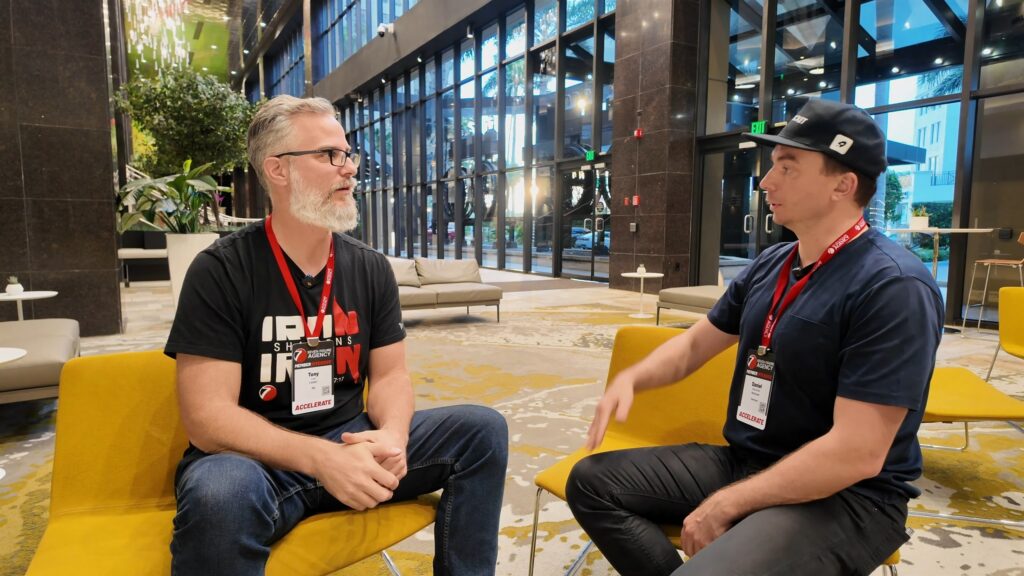
Tony believes the slow season is exactly when to invest in marketing, so you capture more demand when it returns. Daniel agrees: advertising that’s set up correctly helps HVAC companies balance revenue in the off-season, while companies that pause marketing often slow down and keep paying salaries with little work coming in.
Your marketing partner should understand your business
Tony’s final point is about choosing an agency. Marketers don’t run HVAC companies, but a good partner understands how they operate and knows its fee is a cost on your P&L. If the work doesn’t pay off, the business can’t afford it. Agencies that don’t think this way are just vendors pushing marketing packages. If you want a second opinion on your plan, see our HVAC marketing consulting.
Wrapping up
Daniel sums it up: if you want to grow, define your org chart, see which roles you’re still playing, and hand them off one by one. That’s how a company moves to multiple seven figures and then eight figures.
“Nothing changes until it changes.“
Subscribe on 8-Figure HVAC Brands Podcast
New episodes of the 8-Figure HVAC Brands Podcast come out every week, so subscribe on YouTube to catch the next one.