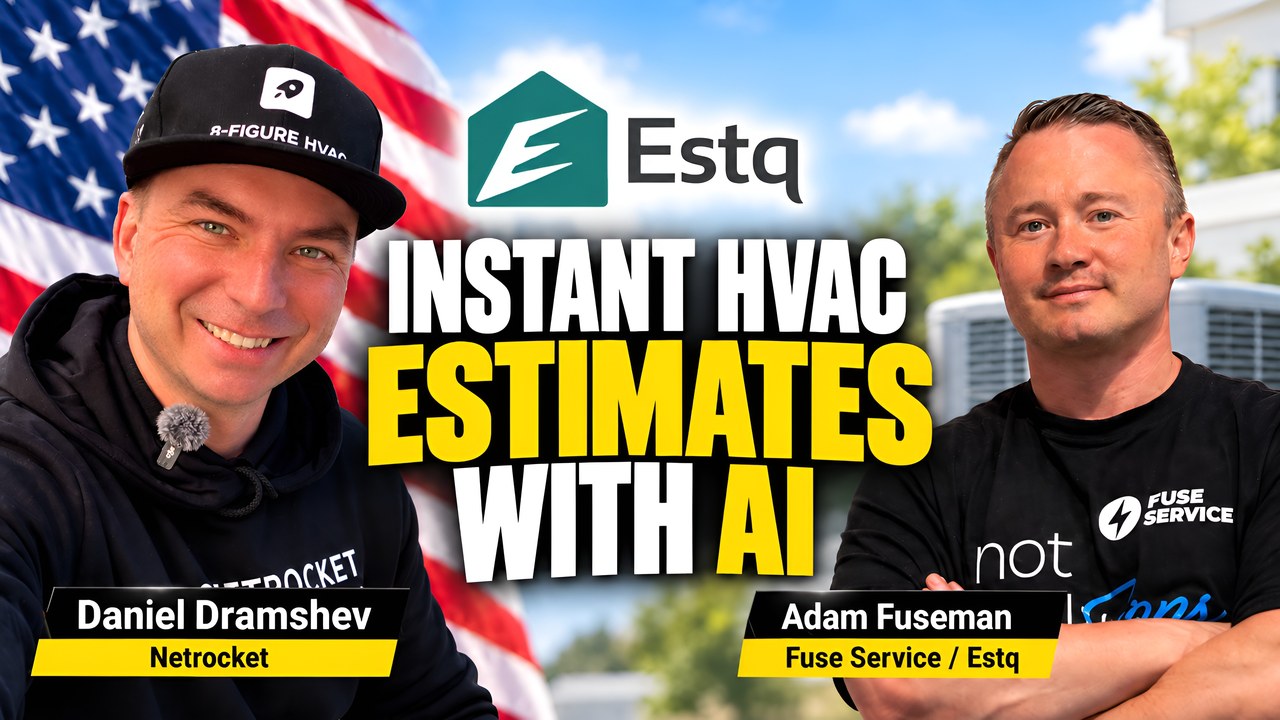
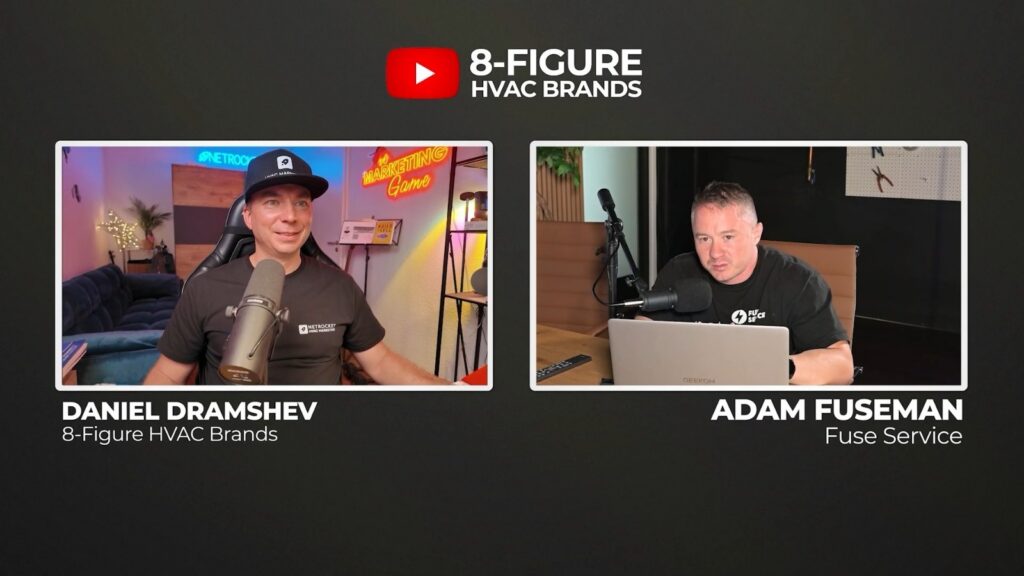
In this episode of the 8-Figure HVAC Brands Podcast, Netrocket founder Daniel Dramshev talks with Adam Fuseman, founder of Fuse Service and creator of Estq. In 2025, Fuse Service’s main location in San Jose did $46 million in revenue, and its franchise locations did more than $24 million. Adam explains how AI raised his team’s booking rate, what software runs the business and what it costs, and why he built Estq, a platform that shows homeowners real prices for home service jobs.
In an earlier episode, Daniel visited the Fuse Service office in San Jose and toured its departments, training center, and warehouse.
About the guest
| Name | Adam Fuseman |
| Companies | Fuse Service, Estq |
| Location | San Jose, California |
| Founded | March 2017 |
| Revenue in 2025 | $46 million in San Jose, more than $24 million across franchise locations |
From one screwdriver to a franchise network
Adam moved to the U.S. in 2016, hoping to work in IT. He had already done electrical and air conditioning jobs on the side, and he thinks like an engineer. In his view, a business is just another system of wheels and bolts.
He started Fuse Service in March 2017 as an appliance repair company, with one screwdriver and a $4,500 Ford Transit Connect. About a year and a half later, he got his first California contractor license.
Today, the San Jose location has more than 130 people in the field and office, plus about 70 remote workers who take calls and handle marketing, permits, scheduling, and purchasing. Fuse Service also has more than 30 franchise locations in more than 10 states. The franchise fee is about $12,000 up front, plus a 3% royalty.
Adam says franchising helps people who know how a business works but are afraid to start. It also comes with resistance from owners who say their market is different. From the outside, people see trucks across the country, but he calls that just the tip of the iceberg.
How AI raised the booking rate
AI already handles about 10% to 15% of incoming calls at Fuse Service. When call volume goes up, AI takes the overflow.
“We are not hiring new dispatchers anymore.“
Fuse Service also built its own contact center for its franchises, which now covers four locations. The team uses AI to transcribe every call, score each conversation, and track KPIs for each dispatcher. Before, the team booked at most 64% of qualified leads. Now it books about 85% to 90%.
The software behind Fuse Service
Adam splits the business into three parts: marketing, sales, and delivering the service. You have to do all three well.
Fuse Service moved from Housecall Pro to ServiceTitan when it added electrical and plumbing, because ServiceTitan connects everything in one place, from scheduling to the warehouse. Adam isn’t happy with every feature, but he calls it a great CRM. The licenses cost about $50,000 a month, or roughly $500,000 to $600,000 a year. Credit card processing fees add about another $500,000 to $600,000 a year. The team is now working on automating payroll, which is complicated in California because of labor and hourly rate compliance.
Marketing at about 7% of revenue
On average, Fuse Service spends about 7% of revenue on marketing. Most of that goes to Yelp, and some goes to Google. If Yelp is a big channel for you too, see how Netrocket handles Yelp ads for HVAC.
Adam says SEO gets a much smaller budget but brings a higher return. In his rough estimate, $5,000 or less spent on SEO generates about $100,000. Netrocket has worked with Fuse Service on SEO for four or five years, and Adam says the company ranks number one on Google for HVAC repair in its area. Learn more about Netrocket’s HVAC SEO services.
Why Adam built Estq
The idea came when Adam built an ADU on his own property. Even as a contractor, he ran into the same problem homeowners do. He reached out to concrete contractors on Yelp, and nobody showed up. For the roof, he texted three companies. One showed up and quoted about $4,000. Another never came and sent a price of about $5,000 or $6,000 by text.
He wondered why no platform showed what people actually paid for the same work. Homeowners who last replaced their HVAC system 15 or 20 years ago have no idea what it costs today, and quotes for the same job can vary widely.
How Estq works for homeowners
Estq shows verified invoices from contractors for jobs done in the last 18 months. A homeowner can type in an address, see jobs done nearby, filter by trade, and get estimates for their own home based on that historical data. The platform also shows air quality data for the neighborhood, collected by sensors on Fuse Service’s vans.
Right now, Estq covers HVAC installs, plumbing and electrical service, fence installation, fire protection, and more. Flooring, roofing, and painting are coming next. As of the recording, the platform had about 27,000 jobs.
Adam plans four parts for the platform:
- Estq Facts: verified invoices from contractors
- Estq Mates: estimates generated from historical data
- Estq Projects: projects homeowners upload themselves
- Estq Bids: quote requests based on photos homeowners upload, coming soon
Homeowners can see 10 verified invoices for free. They get unlimited access if they upload more than 10 of their own projects, or they can subscribe for $19 a month. Adam says the idea was partly inspired by Zillow, and he designed the platform to work in other countries too.
A free widget for contractor websites
Contractors can add a free Estq widget to their website and choose which trades it shows. When a homeowner enters an address, the widget shows property data, past permits, estimates for that home, and available rebates. For example, a Mitsubishi ductless install in that area may qualify for a Silicon Valley Clean Energy rebate from $100 up to $13,000.
“Yelp won’t show you any information about the rebates.“
To see the full report, the homeowner enters their name, phone number, and email, so the contractor gets a lead. For now, those leads go to email, and a CRM integration is in the works. Leads that come through the Estq platform itself go to a contractor for that trade in the area. The team is building a vetting process, and contractors have to be licensed and insured.
Adam says Estq fits any contractor with a license, at least two or three years in the industry, and at least $50,000 a month in revenue.
Advice for owners trying to grow
For owners at $1 million who want to reach $3 or $5 million, Adam’s advice is to learn something new every day and actually apply it, find talented employees and partners, and keep experimenting. He says you’ll have to sacrifice some things, because building a business takes risk and responsibility.
“It’s not about the work life balance. It’s all about the business life integration.“
Subscribe on 8-Figure HVAC Brands Podcast
New episodes of the 8-Figure HVAC Brands Podcast come out every week, so subscribe on YouTube to catch the next one.